by Cathy Fochtman & Linda O’Neil, with commentary by Ann Marie Testarmata
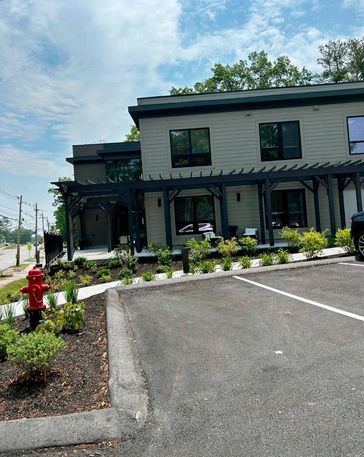
ACTON: The Acton Garden Club, with the support of the Town of Acton, the Acton Historic District Commission, Club members, volunteers, members of the Acton community, and grants, is celebrating its 90th birthday with a revitalization of the Oval Garden in its very visible location in front of Town Hall at 472 Main Street.
Here’s the story of the Oval Garden…so much more than meets the eye...it takes a village. It started long ago with the building of the Italianate Town Hall in 1863, at the site of the town’s Second Meeting House, after fire burned the Meeting House down in 1862, along with the shoe factory and hotel. Acton Center was a much different place then, a bustling hub with a general store, commuting by horse and buggy and entrance to the Town Hall on Main Street.
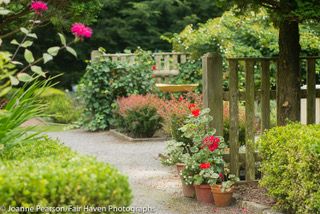
A century and a quarter later came the creation of the Oval Garden by the Acton Garden Club in 1984 to commemorate its 50th birthday. Time did not stand still as the Town Hall was remodeled in 1988 and painted in its original colors in 2016. Now, forty years after the first Oval Garden, the Acton Garden Club is celebrating its 90th birthday with a revitalization of the Oval Garden. The mission of the project is to reinvigorate the plantings in the Oval and create a focal point for the Town Center with a Victorian fountain.
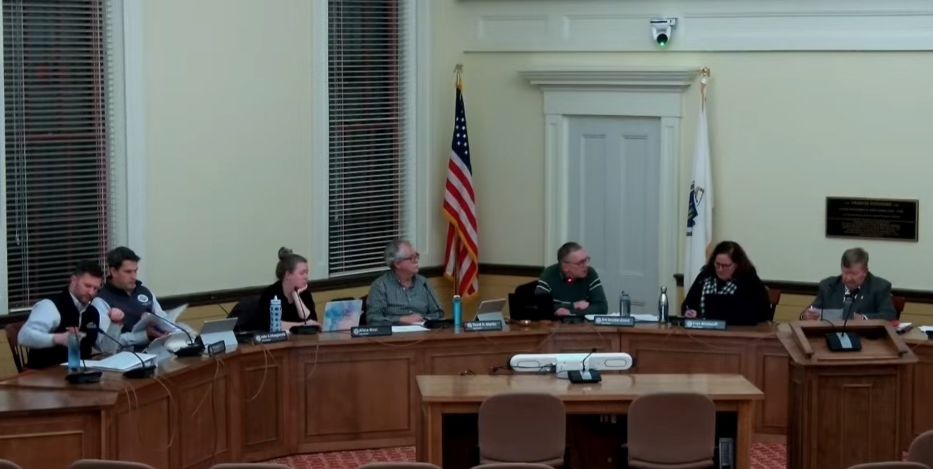
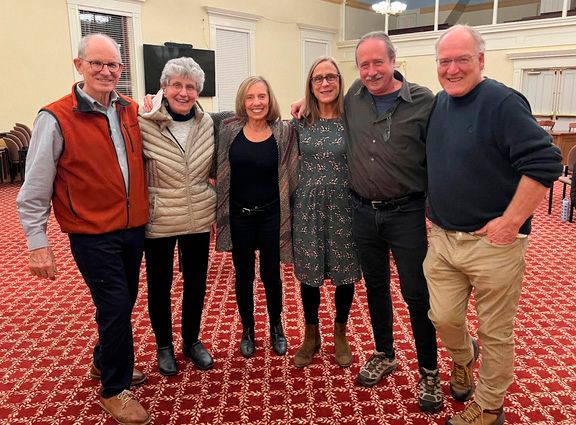
An Oval Committee of the Acton Garden Club was formed under the leadership of Linda O’Neil, who has coordinated upkeep of the garden in recent years, and Cathy Fochtman, leader of the Garden Club Design Study Group. Eileen Ryan, Judy Dembsey, Maura Sharp, Janet Irons, Sue Whitcomb, Frances Portante, Joy Madden, Karen Martin and others have worked passionately to formulate a plan to renovate the garden. They have researched landscape and hardscape design elements, pursued grants and funding, and attended meetings with Town Manager John Mangiaratti, Select Board member Dean Charter, the Select Board, and the Historic District Commission.
I walked by the Oval Garden this morning, enjoying the early morning light, searching for the sun before the next gray day and storm come. Perhaps I was searching for more than light, for hope or peace, or perhaps I was just enjoying the light and remembering the days we worked planting the garden, this brisk January morning.
I thought about its story, one we’ve been asked to share with you by the Acton Exchange. It is very much the same as this emerging newspaper, a story of ideas, creativity, grants, volunteerism, and industriousness by members of all ages, of this diverse community. And like this blossoming news journal, it is in very much the same state, a state of evolution with a story.
The Oval Committee analyzed the site, noting the changes over the past forty years, such as the challenges of full sun exposure, car fumes, and changes in the Town Hall’s appearance. The Town Hall, a white building with black trim in 1984, was repainted in 2016 to its original colors of 1863, yellow with brown and green trim. Shrubs with green gold, like the former central shrub in the original Oval Garden, clash with the new building color palette. The Committee considered more compatible colors such as deep greens, silvery green, and blue green. They also considered plant maintenance which, in recent years, has become more difficult due to the encroachment of weeds, including bindweed and mugwort.
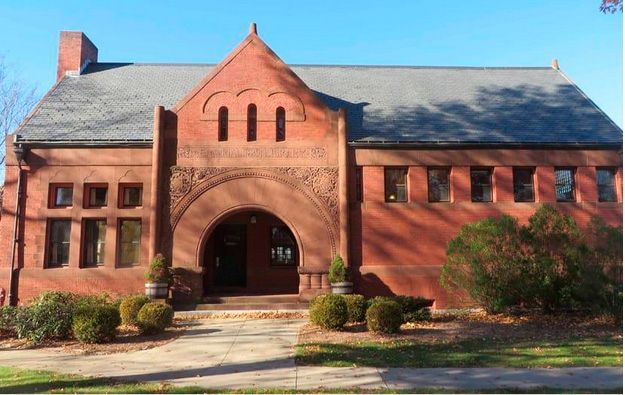
The plant material was also selected to coordinate with existing plantings next door in front of the Acton Memorial Library. That garden was planted by the Garden Club in honor of the club’s
70th anniversary and includes a tall evergreen tree, berry-producing hollies, and a low-growing juniper, all meant to accentuate the beauty of the Town Hall’s architecture.
To extend the Club's horticulture education efforts, one of each plant species in the Oval Garden will display a professional plant label from Nameplate & Panel Technology. The Botanical Labeling Project, in cooperation with Friends of the Acton Arboretum, educates the public about the more than 580 specimen trees and shrubs at prominent Town locations.
The Oval Committee also recommended including a hardscape element in the center of the garden to be surrounded by holly and evergreen conifers. The Historic District Commission concurred with the design, and issued a Certificate of Appropriateness for the installation of a Victorian era fountain. The Fiske-style fountain, with elegant egrets surrounding the pedestal, was bequeathed to the O’Neil family by Mabel Jenks, a respected member of the Acton Garden Club. The O’Neil family has donated the fountain and it will be installed in the spring as a focal point in the garden. J. W. Fiske of New York was known for its cast iron ornamental fountains that were popular in the late 19th century.
A granite boulder will include an Acton Garden Club inscription.
The Oval committee obtained multiple grants to fund the project, including a $750 Civic Grant from the Garden Club Federation of Massachusetts and $500 from an Acton Garden Club appropriation. The project was also chosen to be the recipient of a Plant America Community Projects Grant, from among one hundred applications nationwide, for $1,087 from National
Garden Clubs, Inc.
The Oval Garden’s construction will be completed this spring, in time for the club's 90th Anniversary and the Town's 250th Anniversary commemoration of the commencement of the
American Revolution.
The Town Highway Department prepared the site and provided new topsoil. Club members participated in the preparation of the soil and plant installation. Dick O'Neil of O'Neil Construction Co. assisted with ground preparation, and O'Neil Landscape/Oak Hill Mulch supplied the mulch. Regular watering of the plantings and ongoing pruning, fertilizing, and weeding will be the responsibility of the Club's Oval Garden committee.
I see the garden in its winter state, the mulch, the bare spots, and the plantings that have held up in the recent rains and snows. I think back on the days of labor in November, digging the holes, planting the evergreens, raking the rocks, watching the spreading of the mulch with perfection by our landscape artist. I think about what spring will bring, the fountain, the flowers, the finishing touches and celebration.
I think about what people will see when they walk or drive by, pressed by matters of importance. What will they see if they stop and look at all, for a moment, in the moment: a few green bushes and bare spots that need to be planted? Or will they see the story that has brought this garden to its present state, the story of Acton Center, community, volunteerism, and cooperation?
The Acton Garden Club, established in 1934, supports many historic garden areas and planters in town, as well as other community projects “to promote a greater interest in gardening and to share experiences that shall be of mutual benefit.” They welcome new members who are eager to participate in a wide range of engaging activities. Learn more about the Acton Garden Club by visiting their website or facebook page.